
Düsseldorf
Bonner Str. 367-371
40589 Düsseldorf
Phone:+49 211 515 81 70
Fax:+49 211 515 81 728
Email: info@trade-world-one.de
Vienna
Rathausstrasse 21/12
1010 Vienna
Phone: +43 664 171 89 69
Email: kontakt@trade-world-one.at

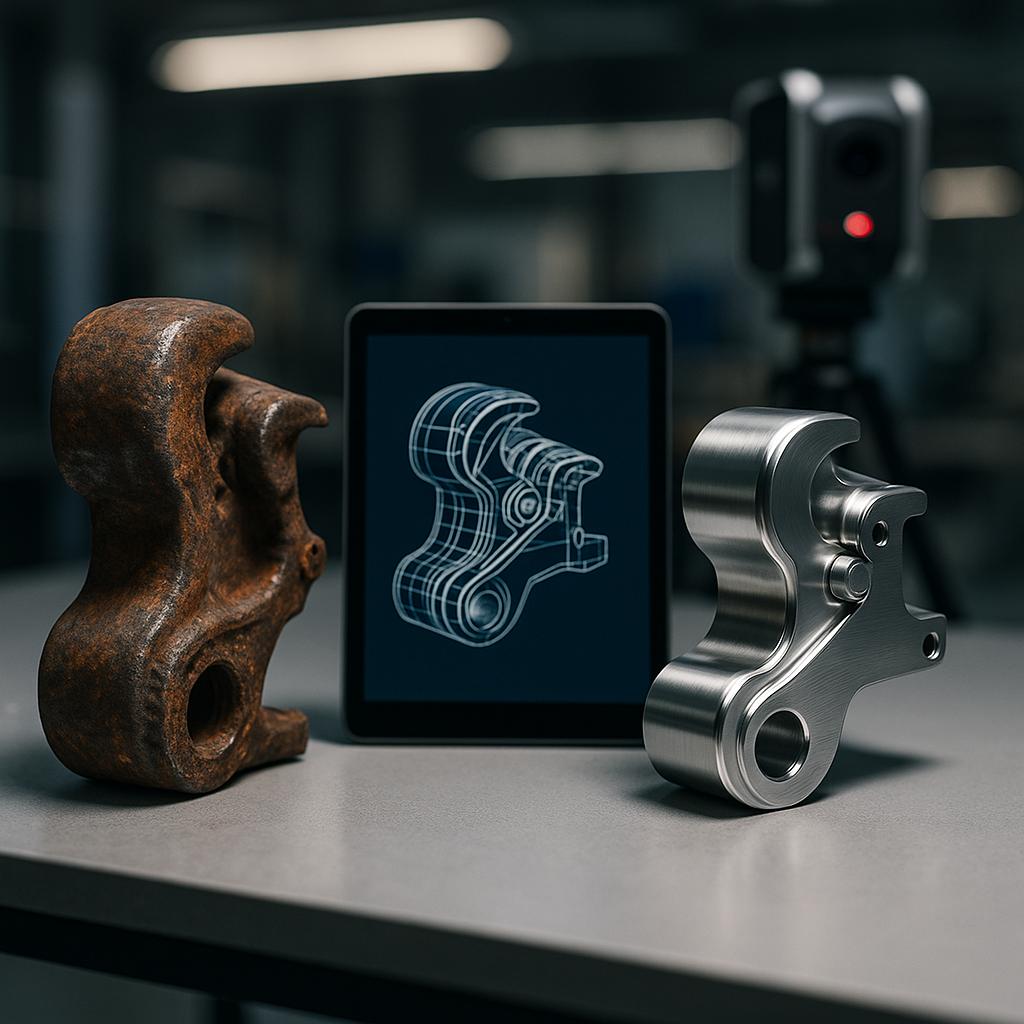
The Invisible Heroes Behind Public Transport – An Introduction to Technical Necessity
Every day, millions of people rely on the reliability of public transport. Trams, metros, and buses must work—no ifs, ands, or buts. Yet behind this taken-for-granted service lies a reality that few passengers are aware of: the maintenance of these complex vehicle systems is a permanent battle against wear, obsolescence, and supply bottlenecks.
Do you have any questions? Feel free to contact us at any time.
» To the contact pageThe situation becomes particularly critical when original parts are no longer available. Manufacturers disappear from the market, product lines are discontinued, suppliers change, and documentation gets lost. This is exactly where the work of the true heroes of public transport begins—those specialists who, through reverse engineering and precise component reconstruction, ensure that worn-out original parts are transformed back into approved, operationally reliable spare parts. These experts secure the mobility of our cities, even if their work takes place behind the scenes.
The Initial Situation: When Spare Parts Become Scarce
The average service life of a tram is thirty years or more. Metros are sometimes operated even longer. During this period, the vehicles undergo multiple overhauls, countless maintenance cycles, and permanent wear processes. While the vehicle structure is generally designed for this long service life, this does not necessarily apply to all components and parts.
Spare parts procurement in public transport companies is complex: original parts are often only available for a limited period after the end of production. Manufacturers are often legally obliged to keep spare parts available for only ten to fifteen years. After that, it becomes critical. Components such as couplings, brake linkages, wheelset carriers, insulators, or specialized electronic components suddenly become a problem.
To make matters worse, technical documentation is often incomplete, especially for older vehicles. Original drawings have been lost, were not handed over during a change of manufacturer, or never existed in that form because components were manufactured based on samples. For public transport operators, this means: A defective part cannot simply be reordered—reverse engineering and redesign become unavoidable.
Reverse engineering: Definition and Distinction
Reverse engineering, often referred to as back-engineering or reconstruction, is the systematic process of analyzing an existing product with the aim of understanding and documenting its design, function, and specifications. In the context of transportation technology, this is not about illegal product piracy, but about the legitimate and necessary reproduction of spare parts when original documentation or sources of supply are no longer available.
The process differs fundamentally from regular design engineering. While new designs start with functional requirements and develop a solution from them, re-engineering takes the opposite path: from the existing solution—the worn-out original part—we deduce the requirements and the design logic.
This approach requires a deep understanding not only of manufacturing technology but also of the historical evolution of design methods, material standards, and production processes. A brake linkage from the 1990s follows different design principles than a modern component—not necessarily because it was inferior, but because different standards, materials, and manufacturing processes were the norm at the time.
The Systematic Process: From Design Analysis to Approval
Capture and Digitization via Component Measurement
The first step of reverse engineering begins with the precise capture of the original part. Modern 3D scanning methods enable the non-contact measurement of complex geometries with accuracies in the hundredth of a millimeter range. Laser scanning, structured light projection, or CT scanning provide high-resolution point clouds that serve as the basis for further processing.
But beware: A worn part is not identical to the original new part. Wear, deformations, corrosion, and previous repair attempts have left their marks. The art of component reconstruction lies in distinguishing between design-intent geometries and those caused by wear. A wheelset carrier that has been in service for twenty years shows signs of fatigue and possibly plastic deformation—these must not be adopted as the nominal geometry.
This is where experience comes into play: engineers with practical knowledge of vehicle construction recognize which tolerances were intended by design, which fits must be present, and where wear has occurred. This expertise cannot be replaced by software—it is the result of decades of experience in the industry.
Material Analysis and Qualification
Parallel to geometric capture, material analysis is performed. What material was used? What mechanical properties must it possess? What surface treatment is necessary?
Modern analysis methods such as spectral analysis, X-ray fluorescence, or metallographic examinations allow for the precise determination of the material composition. But here, too, pure analysis is not enough: knowledge of historical material standards is crucial. A steel specified according to DIN standards in the 1980s may need to be transferred to an EN standard today—not always a one-to-one correspondence.
Safety-relevant components are particularly critical: brake linkages, couplings, load-bearing structures. Here, not only the static strength values must be correct, but also dynamic properties such as fatigue strength, notched impact strength, and corrosion resistance. The choice of material determines operational safety and eligibility for approval.
Constructive Reconstruction to CAD Model
A parametric CAD model is now created from the point cloud. This step of reverse engineering is far more than simple "tracing." It involves understanding and retracing the design logic: Why did the designer choose this geometry? What load cases were considered? Which manufacturing processes were intended?
The reconstruction is carried out according to engineering principles: radii, chamfers, and wall thicknesses follow logical relationships. Tolerances are not set arbitrarily but specified according to function. Mating surfaces receive appropriate surface finishes. Threads are executed in accordance with standards and load requirements.
In many cases, the worn part is not reproduced one-to-one, but optimized. Weak points that have become apparent during operation are eliminated. Materials are adapted to current standards. Manufacturing processes are modernized without compromising function. The result is a spare part that functionally corresponds to or even exceeds the original—with full compatibility with the existing system.
Production Planning Without Production Drawings
A particularly demanding scenario is manufacturing based on samples without existing drawing specifications—such as with brake linkages from our stock range. Here, neither a technical production drawing nor a detailed specification exists. Only the component itself and the knowledge of its function within the overall system are available.
In such cases, the process begins with a comprehensive functional analysis: What forces occur? What movements must the component execute? With which other components does it interact? What wear patterns are typical?
Based on this analysis, complete technical documentation is created—backwards from the component to the drawing. Tolerances are defined according to function, critical dimensions are identified, and inspection characteristics are defined. The result is a manufacturing document that enables reproducible series production while simultaneously meeting all requirements for quality assurance and traceability.
Regulatory Requirements and Approval Processes
Normative Foundations
The reproduction of spare parts for rail vehicles is subject to strict regulatory requirements. European standards such as EN 15085 for the welding of railway vehicles and components or EN ISO 3834 for quality requirements in fusion welding set clear benchmarks.
In addition, vehicle-specific approvals and operating permits apply. A spare part must demonstrably possess the same technical properties as the original part for which the approval was granted. This requires comprehensive documentation and proof of testing.
ISO 9001 certification, as held by Trade World One, is a basic prerequisite but is not sufficient on its own. In addition, specific evidence regarding material qualification, manufacturing processes, and inspection procedures is required. Every safety-relevant component must undergo a First Article Inspection (FAI) that unequivocally proves its suitability for use.
Documentation Obligations in Re-Engineering
Documentation is the backbone of every reverse engineering project. It must provide gapless proof of:
- Origin and Reference: Which vehicle type does the original part come from? What was its position in the vehicle? Which manufacturer originally produced it?
- Analysis and Specification: What geometric data were determined? Which materials were identified? What mechanical properties were verified?
- Design and Calculation: What criteria were used for the re-engineering? What calculations were performed? What safety factors were applied?
- Manufacturing and Quality Assurance: Which manufacturing processes were used? What tests were conducted? What measurement results were achieved?
- Acceptance and Release: Which inspection authority accepted the part? What certificates of conformity are available?
This documentation is not an end in itself, but the foundation for operational safety. In the event of damage, it must be traceable at all times that the spare part was properly specified, manufactured, and tested.
Testing and Validation
The validation of a spare part created via reverse engineering is a multi-stage process. First, individual tests are performed on the manufactured components: dimensional inspection, material testing, non-destructive testing (NDT) for cracks or inclusions, and surface inspection.
Functional tests follow: Does the part fit into the intended installation position? Does it meet the kinematic requirements? Is compatibility with adjacent components ensured?
For safety-critical components, load tests are also required. A brake linkage must be proven capable of absorbing the specified forces without failure. A wheelset carrier must withstand the dynamic loads of driving operations.
In critical cases, a pilot installation can also be useful: The spare part is first tested in a single vehicle under real operating conditions before series release is granted. This field test provides valuable insights into long-term behavior and potential optimization opportunities.
Technical Challenges in Practice
Obsolescence Management
Obsolescence—the unavailability of components due to discontinued production—is one of the greatest challenges in the maintenance of long-life technical systems. For rail vehicles, the problem is exacerbated by the extremely long lifecycle of the vehicles.
Strategic obsolescence management uses reverse engineering not only to solve acute bottlenecks but also to proactively create supply security. By identifying critical components early and systematically documenting them via reverse engineering, public transport operators can reduce their dependence on single suppliers and increase supply reliability.
A practical example: Electronic control components age not only physically but also technologically. Microcontrollers that were state-of-the-art twenty years ago are no longer available today. However, their functionality can be emulated by modern components—provided the original mode of operation has been fully understood and documented.
Material Substitution
The originally used materials are not always available in the same specification. Steel grades change, standard designations are updated, suppliers disappear from the market. The art of reconstruction lies in finding an equivalent or better substitute material that meets all functional requirements.
This requires deep metallurgical understanding. A mere translation of standard designations is not enough. Mechanical properties, weldability, corrosion resistance, fatigue behavior—all these characteristics must be considered and weighed.
In our practice, it has been shown that modern materials often offer advantages: higher strength with lower weight, better corrosion resistance, easier joining. The challenge lies in utilizing these benefits without jeopardizing compatibility with the legacy system.
Interfaces and Compatibility
A spare part created via reverse engineering must fit perfectly into the existing system. This applies not only to the geometric fit but also to functional and physical interfaces.
An example: A coupling element must not only match its counterpart geometrically but also be compatible in terms of hardness, surface finish, and tribological behavior. Too soft—and it wears out quickly. Too hard—and it damages the counterpart. The balance is crucial.
Similarly with threads: Is it a metric thread or a Whitworth thread? What tolerance class? What surface finish? These details may seem trivial, but they determine function or failure.
Experience from decades of procurement for international projects—such as gained by our founder Rainer Schieck at SIEMENS—shows: It is precisely the seemingly simple details that are often the biggest stumbling blocks. A half-millimeter deviation, a tolerance grade too loose, a forgotten hardening process—and the component does not function.
Economic Analysis of Component Reproduction
Cost Structure
Developing a spare part via reverse engineering initially incurs higher costs than a simple catalog order—if a catalog order were even possible. Investments in analysis, design engineering, tooling, and First Article Inspection (FAI) must be made before the first ready-to-use part is available.
However, this view is too short-sighted. The alternative to reconstruction is often not a cheap catalog order, but the standstill of vehicles, the decommissioning of entire fleets, or complex structural modifications. Compared to these scenarios, reverse engineering is highly economical.
Moreover, unit costs decrease significantly with larger quantities. Once documented and approved, spare parts can be mass-produced. Stockpiling—as in our 1,500 square meter warehouse—then enables rapid availability at calculable costs.
Strategic Benefit
The value of re-engineering goes far beyond mere cost savings. It creates independence from individual suppliers, reduces procurement risks, and increases planning security. Public transport operators regain control over their spare parts procurement—a strategic advantage that should not be underestimated.
Furthermore, valuable knowledge is generated: The complete documentation of components, which originally may have only existed as a "trade secret" with the manufacturer, becomes the property of the operator. This knowledge can be used for future procurements, for optimizations, or for tendering to alternative suppliers.
In times of increasing supply chain problems—exacerbated by geopolitical tensions and pandemics—this resilience is priceless. A public transport operator that can procure critical components itself through systematic reverse engineering is significantly less vulnerable than one dependent on a single manufacturer.
Best Practices and Success Factors for Component Reconstruction
Early Planning
The ideal time for component reconstruction is not the moment the last spare part is used up, but years before. Systematic obsolescence management identifies critical components early on and initiates documentation while original parts are still available in good condition.
This forward-looking planning makes it possible to carry out the process without time pressure, evaluate various manufacturing options, and develop optimal solutions. Emergency solutions under time pressure are always more expensive and riskier.
Partnership Instead of Transaction
Reverse engineering is not a standard product that you simply order. It is a complex development process that requires close collaboration between the operator, technical procurement partner, and manufacturer.
At Trade World One, we see ourselves not just as a supplier, but as a partner to our customers. Our team of engineers, logistics specialists, and procurement experts works closely with the technical departments of public transport operators. We speak the same language—technical, precise, solution-oriented—because we come from the same industry.
This partnership begins with problem analysis and extends to long-term support. We document not just the component, but also the application, the installation context, and typical failure patterns. This knowledge is incorporated into continuous improvements.
Quality Assurance as a Fundamental Principle
Quality in spare parts supply is non-negotiable—especially in the safety-critical public transport sector. Our ISO 9001 certification is not just a piece of paper, but lived practice in every step of the process.
From incoming analysis to design and final inspection: Every step is documented, every measurement traceable, every part identified. This systematic approach creates not only regulatory compliance but, above all, safety—for the operator and ultimately for the passengers.
Future Perspectives: Digitalization and Additive Manufacturing
Reverse engineering technologies are evolving rapidly. 3D scanning is becoming more precise and faster, AI-supported software automatically recognizes geometries and suggests design parameters, and digital twins allow for virtual testing before physical production.
Particularly exciting is the combination of reverse engineering with additive manufacturing processes. Metal 3D printing is increasingly reaching the quality of conventional manufacturing methods and offers new possibilities: Complex geometries that previously could only be produced laboriously by casting or milling can be printed directly. Small quantities become economically viable. Lightweight design optimizations that would not be possible with classical methods can be realized.
Yet, despite all technological enthusiasm: the basic principles remain. Even a 3D-printed spare part must meet functional requirements, be material-technically qualified, and be normatively approved. Technology is the tool—the expertise of the users remains decisive.
Conclusion: Reverse Engineering as a Pillar of Operational Safety
Reverse engineering in transportation technology is far more than a technical stopgap for spare parts problems. It is a strategic competence that creates operational safety, economic efficiency, and independence.
The invisible heroes behind public transport—the engineers who analyze worn parts, the designers who reconstruct geometries, the materials experts who qualify materials, the quality inspectors who document every step—they all contribute through the qualified reproduction of spare parts to keeping the city moving. Every day. Reliably.
With our industrial DNA, our global network, and our technical expertise, we at Trade World One understand our customers' challenges from our own experience. We know that it’s not about catalog products, but about solutions. That availability counts when it is needed. That technical precision determines success or standstill.
While others are still discussing, we are already delivering—because we know the problems, master the solutions, and understand the responsibility. Because without these parts, without this expertise, without this reliability, the city doesn't move.
That is our drive. That is our expertise. That is who we are: Trade World One – Your Technical Procurement Partner with Industrial DNA.
Transparency Note: The content above was created with AI assistance and has been carefully reviewed by our team. We are committed to ensuring the highest quality. If you have any comments, we welcome your feedback via our contact form.
Sources
- Reverse Engineering von digitalen Medienartefakten – Zenodo
- Reverse Engineering von Logik-Gattern in integrierten Schaltkreisen – Humboldt-Universität Berlin
- Reverse Engineering vergangener urbaner Mobilitäten – Max-Planck-Institut
- Empirische Studie zum Reverse Engineering von Windows-Malware – HAW Hamburg
- Reverse Engineering und Rapid Prototyping – Springer Professional
- Reverse Engineering Definition – Gabler Wirtschaftslexikon
- Möglichkeiten für den Einsatz von Reverse Engineering – TU Dresden
- Reverse Engineering – Wikipedia
- Reverse Engineering – Britannica
- International Organization for Standardization (ISO) – Standards für Engineering
Do you have any questions? Feel free to contact us at any time.
» To the contact page
 English
  Deutsch
  Español
  Français
  Italiano
  Nederlands
  Svenska
  Dansk
Dansk  Suomi
Suomi  Norsk bokmål
  Português